
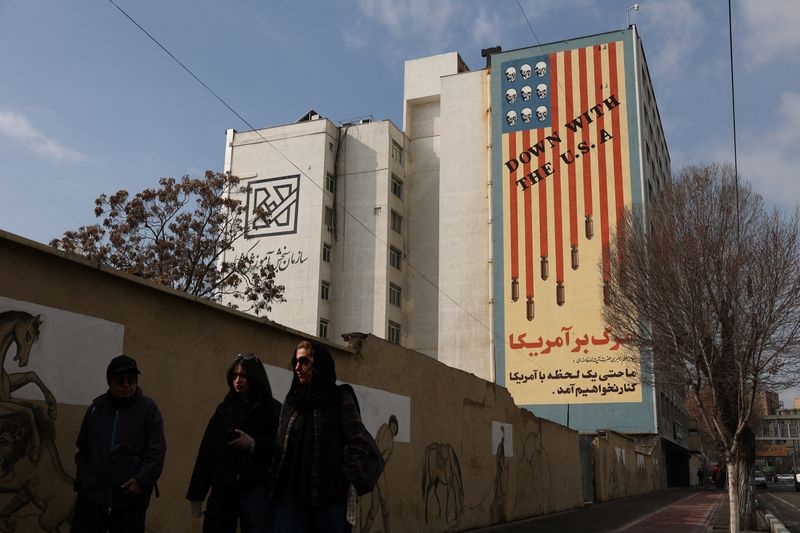
Oil prices held steady on Friday as investors awaited news from high-stakes talks between the United States and Iran that are taking place in Oman amid fears of another supply-disrupting Middle East conflict.
Brent crude futures rose 7 cents, or 0.1%, to $67.62 a barrel by 1055 GMT, while U.S. West Texas Intermediate crude was also up 7 cents, or 0.1%, at $63.36 a barrel.
Still, Brent was set to end the week 4.3% down, as WTI was on track to end the week little changed.
"Investors are watching the U.S.-Iran talks, and their sentiment is shaped by the outcome of these talks," said Tamas Varga, an oil analyst at brokerage PVM.
The market is waiting for the outcome of these negotiations, he said.
Lack of consensus on the agenda for the meeting between Iran and the United States has kept investors anxious about geopolitical risk.
Iran wants to stick to nuclear issues, while the United States wants to discuss Iran’s ballistic missiles and support for armed groups in the region.
Any escalation of tension between the two nations could disrupt oil flows, since about a fifth of the world’s total consumption passes through the Strait of Hormuz between Oman and Iran.
Saudi Arabia, the United Arab Emirates, Kuwait and Iraq export most of their crude via the strait, as does fellow OPEC member Iran.
If the U.S.-Iran talks ease the prospect of conflict in the region, oil prices could decline further.
"We think that geopolitical fears will give way to weak fundamentals," Capital Economics analysts said in a note, pointing to a recovery in Kazakhstan’s oil output that will help push prices lower, towards $50 a barrel, by the end of 2026.
On a weekly basis, prices were weighed down by a broader selloff in markets and by persisting expectations of an oversupply of oil, analysts said.
Saudi Arabia cut the official selling price of its Arab Light crude to Asia for March to around a five-year low on Thursday, marking the fourth straight month of price cuts.
"The underlying fundamental backdrop is not really encouraging, it implies an oversupplied market," said PVM’s Varga.


 한국어
한국어
 Tiếng Việt
 中文
中文