

By Howard Schneider
WASHINGTON (Reuters) - The U.S. job market in April cleared a key hurdle in its slow return from the COVID-19 pandemic when a wonky economic chart known as the "Beveridge Curve" finished its own journey from where it had shifted during the health crisis back to where it was in 2018 to 2019.
The Beveridge Curve plots the relationship between job openings and the unemployment rate, and data released on Tuesday further validates an idea floated by Federal Reserve Governor Christopher Waller in mid-2022 that, counter to the idea that inflation could only fall with a large rise in the unemployment rate, the pandemic's elevated level of job openings pointed to an alternate path.
A drop in job openings could create the economic "slack" needed for inflation to fall without much change in actual joblessness - returning the Beveridge Curve to where it was.
As of April, that appears to be what has happened.
The story isn't completely written: Inflation, which was running at 2.7% in April based on the Fed's preferred measure, is not back to the U.S. central bank's 2% target, and recent progress has been sluggish.
But measures of what's happening in the labor market are looking increasingly like they did before the pandemic.
NOT A MARQUEE CONCEPT
The Beveridge Curve is not one of the marquee economic concepts beyond the community of labor experts, but it has had a moment during the pandemic, with a large shift at the start of the health crisis and now a round trip back. Still unresolved is whether further progress on inflation - the so-called "last mile" - will require a move along the normal part of the curve, with further declines in job openings associated with rising unemployment.
JOB OPENINGS TO UNEMPLOYED
As the economy reopened from the pandemic, firms scrambled to meet a wave of demand. Job openings spiked. The ongoing health crisis, however, put a damper on the willingness to work, crimping labor supply.
By the spring of 2022 the Bureau of Labor Statistics estimated there were more than two open jobs for each unemployed person. The number before the pandemic never went much beyond 1.24.
In April it had returned to 1.24, a steady realignment between the demand for workers and those available to fill jobs.
QUITS RATE
From "ghosted" employers to a wave of retirements, the pandemic was a moment of peak leverage for people who wanted to negotiate new terms, a new job or better pay, or simply not show up. The quits rate told the tale, with nearly 3% of the workforce leaving jobs every month from mid-2021 to mid-2022 - a historic reshuffling of the labor market.
Much to the relief of human resource officers as well as Fed policymakers, it has been at 2.2% for six straight months, below where it was before the pandemic.
UNEMPLOYMENT RATE
An unemployment rate of around 4% is what the U.S. can support without rising inflation, according to Fed economic projections. But in mid-2018 the jobless rate dipped below that level and, as the spike in unemployment caused by the pandemic receded, resumed the same trend in early 2022. Whether that represents a "new" normal of high comparative demand for labor remains to be seen; job markets may just be functioning better through, for example, technology that improves matching and allows for faster hiring.
Regardless, it's another way today's job market looks like it did before the coronavirus outbreak.
MONTHLY PAYROLL GROWTH
The release on Friday of the U.S. government's monthly jobs report will provide the latest look at a key aspect of labor normalization when employment and job growth data for May are released.
Even if the U.S. population is growing slowly, it is still growing, so more jobs are needed each month to keep pace. Exactly how many more is a matter of debate. There are estimates of fewer than 100,000, though lately a jump in immigration has led to speculation that the number could be double that figure.
The job growth seen during the post-pandemic reopening of the economy, however, is widely considered unsustainable. It has been slowing, with a pace gradually coming into line with the average of 183,000 per month seen in the decade before the health crisis.
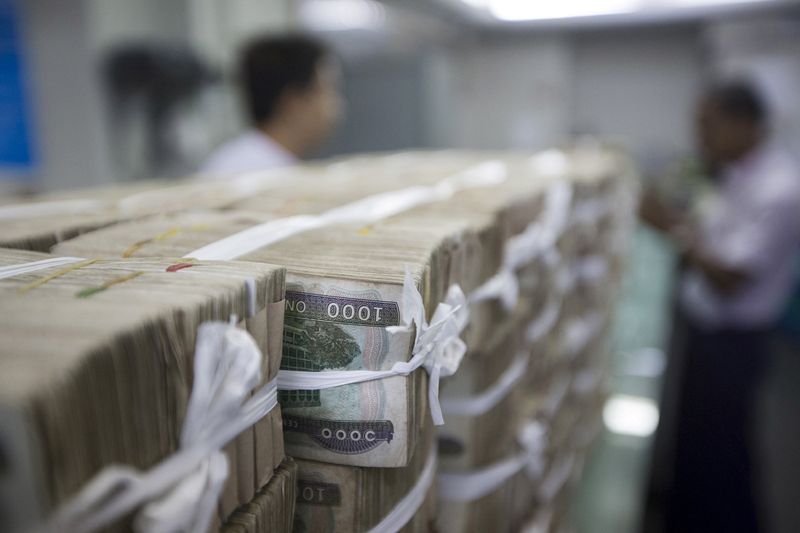
(Reuters) - Myanmar's junta is cracking down on gold and foreign exchange traders and agents selling foreign real estate, with 35 arrests announced in the last two days as part of efforts to stabilise its rapidly depreciating currency.
State media said these include five people charged with illegally selling condominium units in Thailand and 14 people arrested for allegedly destabilising the foreign currency exchange rate.
The kyat currency hit a record low last week, plummeting to around 4,500 per dollar on the black market, according to five foreign exchange traders.
Black market rates for the kyat have for years been significantly higher than the reference rate of Myanmar's central bank, currently set at 2,100 kyat per dollar.
"The government is working towards the stability of the country and the rule of law," the Global New Light of Myanmar newspaper said on Tuesday, carrying photographs of over a dozen suspects.
"Security organisations have taken action against business people engaged in speculation to hinder the country's economic development," it said.
Another 21 people have been arrested for allegedly destabilising gold prices, the newspaper reported on Monday.
The impoverished Southeast Asian country of about 55 million people has been in political and economic turmoil since a 2021 coup when the military ousted an elected civilian government after a decade of tentative democracy and economic reform.
Myanmar's economy, already fragile after decades of military rule and the pandemic, has wilted since the coup, with foreign investment drying up, exacerbated by western sanctions.
Poverty rates have almost doubled from 24.8 percent in 2017 to 49.7 percent in 2023, according to the United Nations Development Programme.
The shadow National Unity Government (NUG), comprising former lawmakers and other junta opponents, said the military government has printed large volumes of currency since taking power and ramped up military spending, exacerbating the country's economic problems.
A junta spokesman did not respond to a call from Reuters seeking comment.
"We understand that they are continuing to print kyat," NUG finance minister Tin Tun Naing said at an online press conference on Monday.
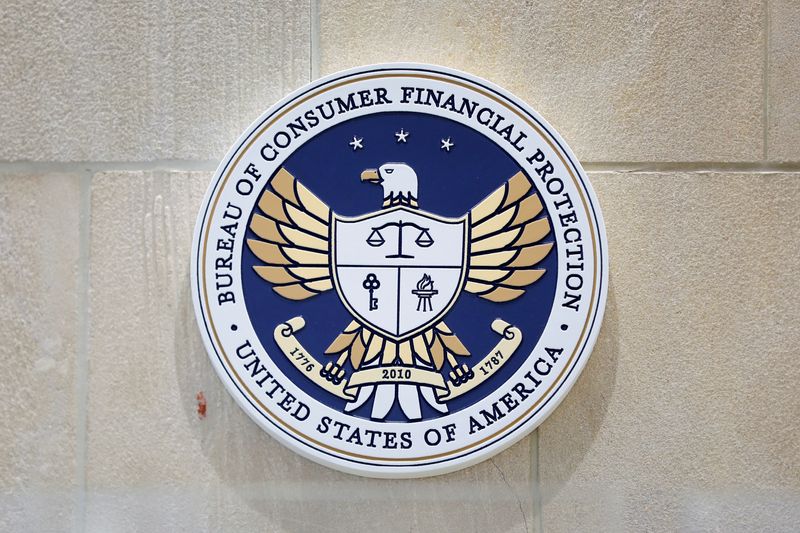
(Reuters) - The U.S. consumer financial watchdog agency on Monday announced the creation of a public database to identify nonbank financial companies caught violating consumer laws, saying it would help catch and deter corporate repeat offenders.
New regulations require debt collectors, mortgage and payday lenders, credit reporting companies and other nonbank financial services companies, many of which are not otherwise registered or licensed, to inform the Consumer Financial Protection Bureau (CFPB) of actions taken against them at the federal, state and local level, the agency said.
"Too many American families and businesses have been harmed by repeat offenders in a rinse repeat cycle of illegal activity where bad actors see fines and penalties as just the cost of doing business," CFPB Director Rohit Chopra told reporters.
"The registry is going to help the CFPB and other law enforcement agencies monitor and track repeat offenders in order to better hold them accountable if they break the law."
CFPB officials say the new registry, first proposed in late 2022, continues an agency push to fight corporate recidivism following the creation that year of a Repeat Offender Unit within its supervision program.
The database will be partly available to the public online and should also be used by state attorneys general and other regulators as well as investors and creditors performing due diligence, according to the agency statement.
Agency officials said on Monday that they modified their original proposal in light of some industry feedback. For example, companies that already have enforcement actions recorded in a nationwide licensing system for nonbank mortgage lenders will be able to use a simplified filing process.
However, trade organizations also objected to provisions that appear to remain in the new regulation, including a requirement for senior executives to attest in writing that a given company is in compliance with existing court orders and enforcement actions.
The Electronic Transactions Association, members of which include Amazon.com (NASDAQ:AMZN), Apple (NASDAQ:AAPL) and JPMorgan Chase (NYSE:JPM), last year urged the CFPB to allow appeals and de-listing, but bureau officials said on Monday they had not instituted such procedures.
The first corporate registrations are expected in January of 2025.
By Hyonhee Shin
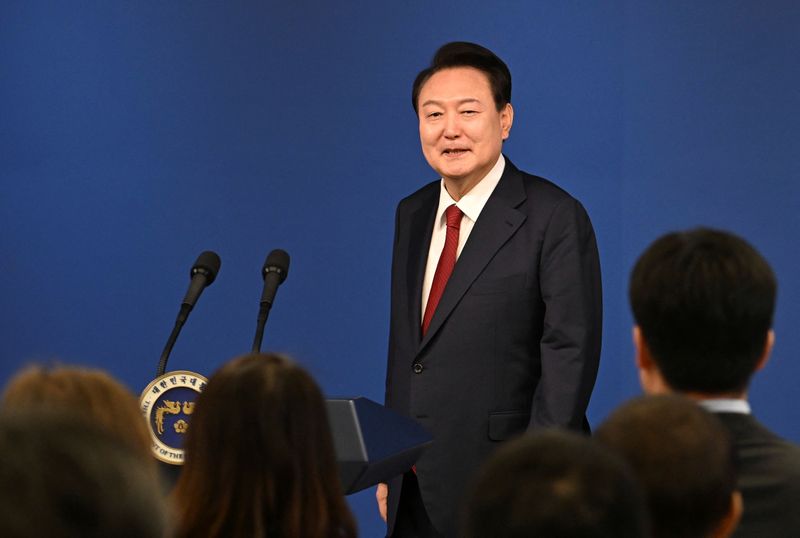
SEOUL (Reuters) -South Korean President Yoon Suk Yeol said on Tuesday the country will step up cooperation with African nations to secure a stable supply of critical minerals and speed up negotiations to promote economic partnerships and trade.
Hosting a first-ever summit with the leaders of 48 African countries, Yoon said South Korea will increase development aid for Africa to $10 billion over the next six years as it looks to tap the continent's rich mineral resources and potential as a vast export market.
"We will seek sustainable ways to work together on issues directly related to future growth, such as stable supplies of key minerals and digital transformation," Yoon said in his opening remarks.
He also pledged to offer $14 billion in export financing to promote trade and investment for South Korean companies in African countries.
South Korea is one of the world's largest energy buyers and is home to leading semiconductor producers. It is also home to the world's fifth-largest automaker Hyundai Motor (OTC:HYMTF) Group, which is making a push for electrification.
Partnering with Africa, which has 30% of the world's reserves of critical minerals including chrome, cobalt and manganese is crucial, Yoon's office has said.
At least 30 heads of state are attending the summit, with delegations from 48 countries participating. Yoon and the chair of the African Union, Mauritania President Mohamed Ould Ghazouani, are due to issue a joint statement, Yoon's office said.
Yoon proposed "shared growth" as a pillar of cooperation with the continent and stressed the need to establish a framework to promote trade and exchange, vowing to speed up talks for economic partnership agreements and trade and investment promotion frameworks.
By reaching out with offers to help with industrial infrastructure and digital transformation, South Korea is trying to tap into a vast and fast-growing market that is home to 1.4 billion people, the majority of whom are 25 or younger.
Park Jong-dae, a former South Korean ambassador to South Africa and Uganda, argued Western and Chinese models of development had failed African nations, and South Korea offered a valuable alternative path.
"The essence of Korean model of development cooperation is human development, and about management, rather than about provision of assistance per se," he said.
"Korea has the experience and knowhow of development ... while many African countries have immense possibilities for development based on yet to be explored, untapped resources and endowment, and dynamic young population," he said.
On Wednesday, South Korean business leaders will host a business summit focused on investment, industrial development and food security.
Yoon will continue separate meetings with visiting leaders.
By Kevin Buckland
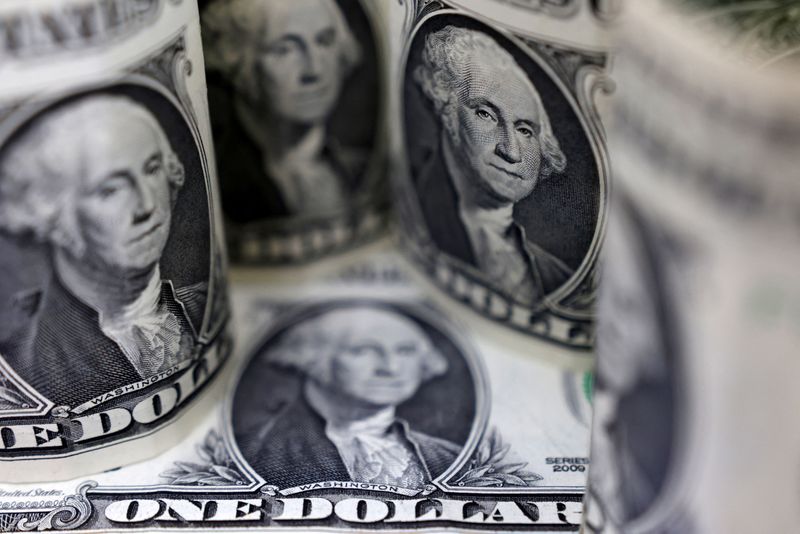
TOKYO (Reuters) - The dollar languished at its lowest since April against the euro and sterling on Tuesday as signs of a softening U.S. economy boosted the case for earlier Federal Reserve interest rate cuts.
The U.S. currency wallowed near a two-week trough to the yen after data showed a second straight month of slowdown in manufacturing activity and an unexpected decline in construction spending.
Following the data, fed funds futures increased the chances of a rate cut in September to around 59.1%, according to LSEG's rate probability app.
That compares with odds of around 55% on Friday, when data showed a stabilisation in consumer price pressures, helping knock the dollar to its first monthly loss of the year in May. Wagers were slightly below 50% earlier last week.
A key test comes in the form of monthly U.S. payroll figures on Friday.
"The persistent high-interest-rate policy of the Federal Reserve is under scrutiny as it continues to weigh on the U.S. economy," James Kniveton, senior corporate FX dealer at Convera, wrote in a client note. "Analysts are closely monitoring the upcoming job data for indications of economic strain."
Currently, a first quarter-point rate increase is fully priced by the Fed's November meeting, with a total of 41 basis points of tightening seen by year-end.
November "is poised to be a tumultuous period for the U.S. dollar due to the confluence of a potentially decisive Federal Reserve meeting and the U.S. elections," Kniveton said.
The Fed's next policy meeting concludes on June 12, when consumer price data is also due. Traders and analysts don't see any risk of a policy change at that gathering, but officials will update their economic and interest-rate projections.
The dollar index, which measures the currency against the euro, sterling, yen and three other major peers, eased 0.05% to 103.99, its lowest level since April 9.
The euro added 0.11% to $1.09155, a level last seen on March 21.
The European Central Bank has telegraphed that policy makers will cut rates at their meeting on Thursday, but a pick-up in inflation in data last week may give officials pause when considering when next to ease.
Sterling rose 0.05% to $1.2814, its strongest since March 14.
However, the dollar added 0.14% to 156.255 yen, clawing its way back from the overnight low of 155.95, its first time below 156 since May 21.
The Bank of England and Bank of Japan also hold potentially pivotal policy meetings later this month.
Elsewhere, the New Zealand dollar rose to $0.6194 for the first time since March 8. The Aussie traded flat at $0.66895, holding close to the two-week high of $0.6695 from overnight.
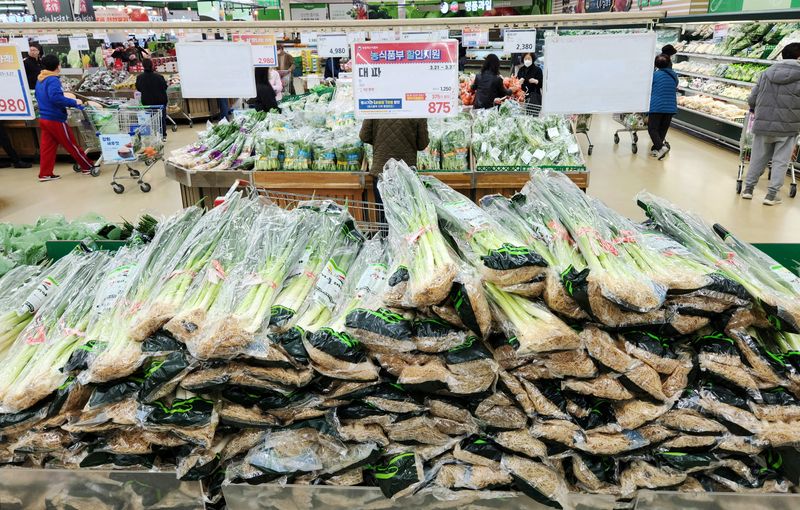
SEOUL (Reuters) - South Korea's consumer inflation slowed for a second straight month in May to a 10-month low, official data showed on Tuesday, coming in lower than market expectations.
The consumer price index (CPI) in May stood 2.7% higher than a year earlier, slower than a rise of 2.9% in April and a gain of 2.8% tipped in a Reuters survey of economists. It was the slowest annual increase since July.
The index rose 0.1% on a monthly basis, according to Statistics Korea, after no change in April and compared with a 0.2% rise expected by economists.
By product, prices of agricultural products fell 2.5% over the month, but petroleum products rose 0.3% and personal service prices gained 0.4%.
The Bank of Korea said last month inflation would likely be on a downward trend throughout the year despite stronger economic growth, because domestic demand was seen recovering only modestly.
The BOK, which held interest rates steady for an 11th straight meeting in May, is expected to lower its policy rate by 50 basis points (bps) to 3.0% in the fourth quarter of 2024, according to a Reuters poll in May.
Core CPI, excluding volatile food and energy items, rose 2.2% year-on-year, slowing from a 2.3% rise in the previous month and marking the slowest since December 2021.
By Leika Kihara and Takahiko Wada
TOKYO (Reuters) - The Bank of Japan must steadily raise interest rates to guard against the risk of inflation accelerating well above its 2% target, said Takeo Hoshi, an academic with knowledge of the country's monetary policy.
Japan's wage-inflation dynamics are changing in ways unseen in the past with intensifying labour shortages pushing up labour costs and prodding more firms to hike prices, said Hoshi, an economics professor at the University of Tokyo.
Having ended a package of unconventional easing steps in March, the BOJ will keep raising rates to anchor inflation expectations around 2%, and eventually start quantitative tightening, Hoshi told Reuters in an interview on Friday.
"Unless the BOJ raises rates, inflation could accelerate too much. The kind of inflation seen in the U.S. and Europe could very much happen in Japan," said Hoshi, who has close ties with incumbent BOJ policymakers.
"There's a significant risk of inflation exceeding the BOJ's target. That's something the central bank should worry about from now on," he said.
Hoshi declined to say how soon the BOJ could raise its interest rate from current near-zero levels, but said hikes should happen "steadily" given upside risks to inflation.
"In deciding when to shift policy, the BOJ must also take into account how its U.S. and European counterparts move as that could affect asset prices including exchange rates," he said.
Hoshi participated in the BOJ's workshop held on May 21, which was part of a review of the pros and cons of its past unconventional monetary policy. He chaired a session that analysed Japan's economic and price developments.
The BOJ ended eight years of negative rates and a policy capping long-term borrowing costs around zero in March, making a historical shift away from its radical stimulus.
BOJ Governor Kazuo Ueda has said the central bank intends to hike rates to levels considered neutral to the economy, as long as growth and inflation move in line with projections.
Many market players expect the BOJ to raise rates sometime this year with some betting on action as soon as in July.
Expectations of a near-term rate hike pushed up the 10-year Japanese government bond yield to 1.10% on Thursday, the highest since July 2011. The benchmark yield stood at 1.065% on Friday.
Hoshi said the recent rise in 10-year yields was a "good sign" that showed the BOJ's decision to end its bond yield control was allowing yields to be driven more by market forces.
But the BOJ must be careful in communicating a strategy for slowing bond buying, and eventually selling bonds, as the huge size of its holdings could magnify the market impact, he said.
"One idea could be for the BOJ to communicate how it would unload its huge bond holdings in, say, 20 years. In doing so, it needs to remind markets that the plan isn't set in stone, and could change depending on circumstances," Hoshi said.
Japan's core inflation hit 2.2% in April, staying above the central bank's target for more than two years, as companies continued to pass on rising raw material costs to households.
The BOJ has stressed the need to keep interest rates low until inflation becomes driven more by sustained wage hikes and robust domestic demand. Ueda has also said inflation expectations are now around 1.5%, short of the BOJ's 2% target.
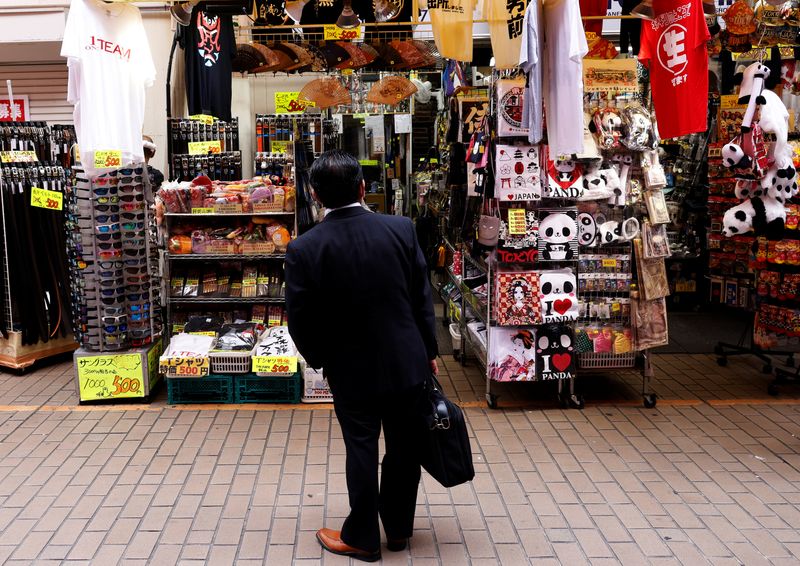
TOKYO (Reuters) - Japan is expected to post its first year-on-year rise in household spending in 14 months, a Reuters poll showed on Friday, although the tepid growth is likely to highlight persistent weakness in the consumer sector.
Spending probably rose 0.6% year-on-year in April, according to a Reuters poll of 17 economists, following a 1.2% decline in March. It would mark the first increase since February 2023.
On a seasonally-adjusted month-on-month basis, all household spending likely edged up 0.2% in April, slowing from a 1.2% increase in the previous month but posting a third straight monthly gain.
The households speeding data is due at 8:30 a.m. June 7/2330 GMT June 6.
"Considering the underlying price hikes, we can only judge consumption shows no sign of putting the brakes on worsening," said Takeshi Minami, chief economist at Norinchukin Research Institute.
"Although annual wage talks resulted in more than 5% wage hikes, households have not yet loosened the purse strings, so the pay raise has not helped boost consumption. The April spending data signals sluggish consumer spending."
Weak private consumption is a source of concern among policymakers striving to achieve sustainable economic growth accompanied by solid wages and durable inflation, which are prerequisites for normalising of monetary policy.
The Bank of Japan (BOJ) in March raised rates for the first time since 2007 in a landmark shift away from ultra easy monetary policy. Investors are seeking clues on exactly when the BOJ will raise interest rates further.
Japan's economy contracted 2% annualised in the first quarter as sharp yen declines pushed up costs and forced consumers to cut spending.
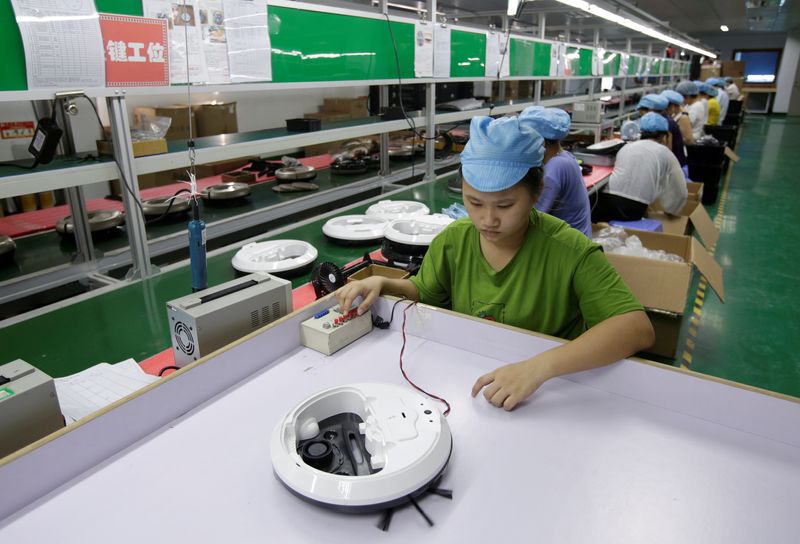
BEIJING (Reuters) - China's manufacturing activity unexpectedly fell in May, keeping alive calls for fresh stimulus as a protracted property crisis in the world's second-largest economy continues to weigh on business, consumer and investor confidence.
The official manufacturing purchasing managers' index (PMI) dropped to 49.5 in May from 50.4 in April, the National Bureau of Statistics (NBS) said on Friday, below the 50-mark separating growth from contraction and missing analysts' forecast of 50.4.
The disappointing number adds to a series of recent indicators showing the $18.6 trillion economy is struggling to get back on its feet, eroding earlier optimism seen after better-than-expected output and trade data.
"I think the data particularly reflects soft domestic demand, the housing sector continued to worsen and retail sales were not strong," said Xu Tianchen, senior economist at the Economist Intelligence Unit.
"The May reading may indicate a temporary blip. We'll probably see an improvement in June as new government policies start to impact, such as the property rescue plan and the issuance of special sovereign bonds," he added.
The PMI's sub-indices for new orders and new export orders both tipped back into contraction after two months of growth, while employment continued to shrink.
The services sub-index under the NBS non-manufacturing survey improved to 50.5 in May from 50.3 in April. But growth as represented by the broader services index, which also includes construction, slowed in May to 51.1 from 51.2 a month prior.
Problems in the property sector have had a negative impact across broad areas of China's economy and slowed Beijing's efforts to shift its growth model more towards domestic consumption from debt-fuelled investment.
Retail sales last month grew at their slowest since December 2022 while new home prices fell at their fastest rate in nine years, suggesting it is too early to say if the battered economy has finally turned a corner.
The International Monetary Fund on Wednesday revised up its China growth forecast by 0.4 percentage points to 5% for 2024 and 4.5% in 2025, but warned the property sector remained a key growth risk.
China this month unveiled "historic" steps to stabilise the property market, but analysts say the measures fall short of what is required for a sustainable recovery.
The IMF said it saw "scope for a more comprehensive policy package to address property sector issues."
Nie Wen, an economist at Shanghai Hwabao Trust, said the decline reinforced the case for more support.
"There is still a need to strengthen stimulus on the demand side, while at the same time sorting the credit channels as soon as possible to avoid financial institutions' balance sheets shrinking, which would have a negative effect on the economy," Nie said.
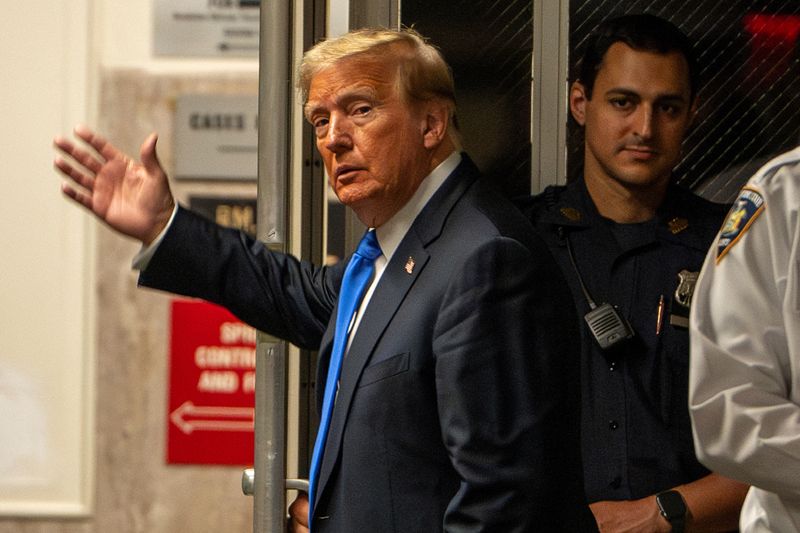
By Luc Cohen
NEW YORK (Reuters) - In their opening statement at Donald Trump’s criminal trial, the prosecutors seeking to win the first-ever criminal conviction of a sitting or former U.S. president made a bold prediction: they would have hard evidence to back up testimony from Michael Cohen, the star witness branded a liar by the defense.
Over the next several weeks, jurors heard testimony from insiders at Trump’s real estate company, his 2016 presidential campaign, and his White House that methodically backed up the two core elements of Manhattan District Alvin Bragg’s case: that Trump was aware of a “catch-and-kill” conspiracy to buy the silence of people with negative information before the election, and that he was involved in a cover-up of Cohen’s hush money payment to a porn star.
That testimony - coupled with evidence such as bank records, emails and a surreptitious recording of Trump speaking about a hush money payment - culminated in the 12-member jury finding Trump guilty of criminal charges.
Its verdict: He illegally falsified business records to hide his reimbursement to Cohen for the $130,000 Cohen paid to buy the silence of porn star Stormy Daniels before the 2016 election about an alleged sexual encounter she had with Trump in 2006.
To be sure, jury deliberations are secret and the reasoning behind the decision to convict will not be clear unless any jurors decide to speak publicly. Trump is almost certain to appeal his conviction.
Cohen testified at the trial in New York state criminal court in Manhattan that the reimbursement payments were falsely labeled as legal retainer fees in Trump’s family real estate company’s books. Cohen said Trump directed him to pay off Daniels, and that he would not have done so without getting paid back.
“He stated to me that he had spoken to some friends, some individuals, very smart people, and that: 'It's $130,000. You're like a billionaire. Just pay it,'” Cohen said on May 13. “And he expressed to me: 'Just do it.'”
The verdict vindicated Bragg, the Manhattan district attorney who was criticized by both Trump's fellow Republicans and some of Bragg's fellow Democrats for bringing a case involving well-known allegations of sexual impropriety, even if the transaction that mattered was financial.
Bragg argued the case was truly about an effort to corrupt the 2016 election - not sex.
"It was the subversion of democracy," prosecutor Joshua Steinglass said in his May 28 closing statement. The "catch-and-kill" conspiracy, he said, was meant "to manipulate and defraud the voters, to pull the wool over their eyes in a coordinated fashion."
The case is widely viewed as less consequential than the other three criminal cases Trump faces on charges over efforts to overturn his 2020 election loss to Democratic President Joe Biden and his retention of sensitive government documents after leaving the White House in 2021.
Trump has pleaded not guilty in the other three cases, which are unlikely to reach juries before his Nov. 5 election rematch with Biden.
'OUT OF CHARACTER’
One challenge for Bragg's case was Cohen's credibility. Cohen went to prison after pleading guilty in 2018 to violating campaign finance law with the payment to Daniels and lying to Congress in 2017 about a Trump Organization real estate project in Russia. Trump's lawyer Todd Blanche hounded Cohen on cross-examination about his lies to journalists and an instance in which he stole from Trump's company.
So prosecutors needed plenty of evidence backing up Cohen’s testimony that Trump was aware of Cohen’s payment to Daniels, which they argued was part of a broader conspiracy to buy the silence of people with potentially negative information about Trump in violation of campaign finance laws.
Jurors did not have to rely solely on Cohen’s testimony to accept that Trump intended to conceal that alleged conspiracy by labeling his 2017 payments to Cohen as legal retainer fees.
David Pecker, the then-publisher of the National Enquirer tabloid, testified that he agreed at an August 2015 meeting with Trump and Cohen to be the campaign’s “eyes and ears” for women coming forward with unflattering stories about Trump.
Jurors heard a tape Cohen surreptitiously recorded of Trump on Sept. 6, 2016, discussing a hush money payment Pecker’s company made to Karen McDougal, a Playboy model who says she had a year-long affair with Trump in 2006 and 2007. Trump denied having ever had a sexual relationship with her or with Daniels.
Jurors saw phone records showing Cohen had several calls with Trump and his bodyguard Keith Schiller - whom Cohen said would hand his phone to Trump - around the time of frantic negotiations with Daniels’ lawyer over the payment in October 2016.
In some of his most damning testimony, Cohen said he, Trump and then-Trump Organization Chief Financial Officer Allen Weisselberg discussed the repayment plan in a January 2017 meeting shortly before Trump’s inauguration as president.
Weisselberg, who is serving a five-month jail sentence after pleading guilty to perjury in a separate case, did not testify for either side at the trial. But jurors saw Weisselberg’s handwritten notes - jotted down on a copy of the wire transfer receipt for Cohen’s payment to Daniels’ lawyer - with instructions as to how Trump Organization controller Jeff McConney should pay Cohen. McConney testified that he understood the payments to be a reimbursement for Cohen, not legal fees.
Hope Hicks, a former communications aide of Trump’s, recalled Trump telling her that Cohen paid Daniels “out of the kindness of his own heart” - consistent with the defense’s efforts to distance Trump himself from the hush money deals.
But Hicks expressed skepticism of that claim.
“That,” Hicks testified on May 3, “would be out of character for Michael.”


 한국어
한국어
 Tiếng Việt
 中文
中文